

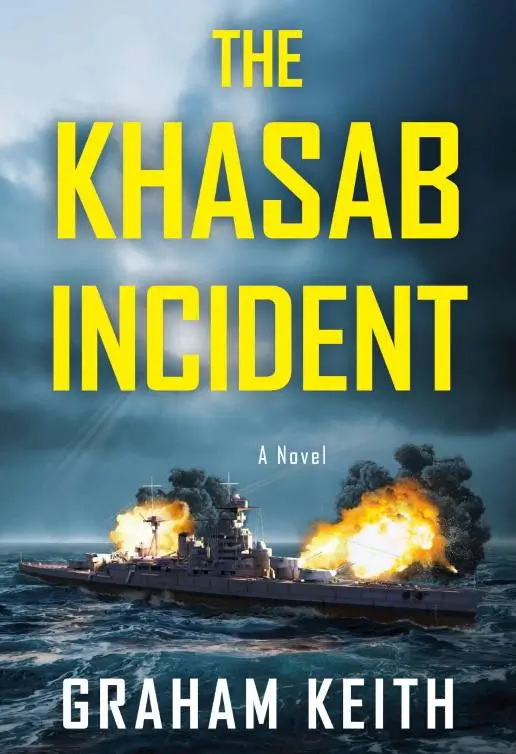
In an ever-evolving world, the most effective fiction serves to both reflect and sometimes provide an escape from the chaos. It helps us grapple with the chaos, it weathers us before the unthinkable, and it reconfirms empathy. The best authors working in contemporary fiction are the ones that take the heartbeat of our times—the noise of our times, and turn this into stories we hold onto.
Graham Keith is one of these authors. In his latest work, The Khasab Incident, he shows how subtle observation, and emotional acuity, can be just as salient to the reader as twists in plot or spectacles in storytelling. His fiction is of a generation of authors reimagining what contemporary fiction can mean.
The Landscape of Modern Literary Fiction
Contemporary authors of fiction write amid rapid social and technological change. Their narratives engage themes of digital isolation, migration, fractured families, and moral ambiguity. But, at their best, these authors immerse us in what remains undeterred—the search for meaning, connection, and belonging.
Writers like Sally Rooney, Kazuo Ishiguro, and Colson Whitehead have established a new set of literary figures explicit in their exploration of the personal and political with fine sophistication. Also emerging is a quieter wave of authors, like Graham Keith, whose fiction is intricately woven with compassion rather than controversy. They convey tales of ordinary people involved in extraordinary moral choices, and of the invisible change that makes a life.
The Power of Subtle Storytelling
One characteristic of many writers today of fiction is that they prefer not to be overt. Instead of telling the reader what to think, they create situations that cause the reader to consider their position. Graham Keith’s writing adheres to that style – it’s straightforward, observant, and emotionally powerful in its directness.
In The Khasab Incident, for instance, all of the tension in the work does not occur within explosive encounters, but rather through the thoughtful moral ambiguities of the characters. The novel is paced so that readers linger in the uncertainty of human motives – a classic descriptor of a literary work driven by character sophistication.
Keith’s retrospective emotional realism is both part of the reason recent fiction feels so compelling and fresh in the current literary arts. His writing suggests that restraint can be just as strong as outright revelation.
Why Contemporary Fiction Matters
To read the work of contemporary fiction authors is to encounter a mirror held up to our moment in history. These books are not escapism; they are empathy in motion. They allow us to see the world through another’s eyes to recognise shared fears, joys, and moral dilemmas.
In the current literary landscape, diversity of voice and setting has never been richer. From diasporic narratives to climate fiction, from autofiction to traditional realism, the form continues to evolve. Yet at its heart lies one truth: good fiction makes us care.
Keith’s contribution sits firmly in that lineage. His fiction, often rooted in cross-cultural experiences, speaks to readers who have felt displaced or changed by travel, time, or circumstance. It’s this universality that gives his writing its quiet strength.
How Modern Authors Connect with Readers
The emergence of digital platforms opens up new models of engagement for authors of contemporary fiction. Authors now often operate at the intersection of fiction and commentary, using social media platforms or newsletters to continue the narrative writing beyond the page.
Graham Keith’s life online captures this same blend between “accessibility and contemplation.” His website provides readers access not only to his published pieces, but to insights into his thinking and travel experiences that inform his writing. This habit of sharing is a recognition of connection as much as craft, the dual qualities that epitomize some of the most enjoyable authors in contemporary fiction.
Recommended Reading for the Modern Reader
If you are discovering contemporary literary fiction, consider adding to your list, along with Graham Keith:
Anne Enright: An expert in interiority and family tension.
Colm Tóibín: An author who masterfully conveys with restrained prose.
Jhumpa Lahiri: A writer who captures migration and belonging.
Rachel Cusk: A writer who is radically revising narrative voice through self-reflection.
Like Keith, all of these authors know how to bring to light the understated intricacies of being human through fiction.
Final Thoughts
The world is ever evolving, but to this point, the preeminent tales remain tethered in compassion. Contemporary authors of fiction continuously remind us that, in spite of disunity and distraction, our shared human-ness remains intact.
In The Khasab Incident, as well as his larger themes and aesthetics of literary imagination, Graham Keith captures that moment of empathy. His tales are at once ageless and timely; realist yet infused with moral-importance.
If you are seeking fiction that connects to the heart and mind, explore Graham Keith’s novels today, and remind yourself of the importance of meaningful imagination.
A professional portrait of contemporary fiction author Graham Keith, whose writing blends emotional realism, nuanced storytelling, and modern literary insight.