
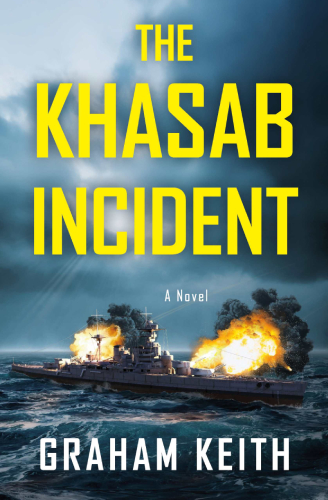

Fiction about the Middle East can, dovetailing the idea of the region with care and compassion, reveal far more than just geography, it reveals the subtle dynamics of faith, identity and survival too frequently portrayed in headlines that simplify the complexity of a very complicated region. For writers, the task is to narrate stories that engage a global readership yet respect more localized nuances.
Graham Keith’s The Khasab Incident is a prime example of how to balance respect with engagement. By faithfully depicting local elements such as culture and emotion, he shows how fiction set in the Middle East can engage and enlighten, rather than perpetuate a stereotype or generalization.
The Importance of Cultural Authenticity
The Middle East has always been a source of inspiration for writers due to its beautiful, complex, and tension-filled nature. However, the question of authenticity often comes up. The stories told about the region have sometimes been seen through a Western viewpoint that has been, thus, stripped of its diversity and humanity.
But modern literature, which takes place in the Middle East, seeks to rebuff that this is the case. Writers such as Hisham Matar, Leila Aboulela, and Kamila Shamsie demonstrate how the combination of firsthand living and empathetic research can break down the stereotypes.
They have put the personal lives of ordinary people against the backdrop of politically charged territory, showing them to be mere cultural clashes dealing with love, loss, and morality. Keith steps into the same lane as these authors. He has a very personal way of writing and at the same time shows a great deal of respect for the cultures he is revealing.
In The Khasab Incident, the place where the story is set, Oman, is not just a place where the action takes place, it is a vibrant actor in the play. The harsh nature of the place, with its ups and downs and loud and quiet, creates the moral dilemmas that are the very core of the book.
The Power of Place
Setting is of utmost importance to any novelist who writes about the Middle East. The scenery, whether it is a desert, a city, or a coast, is full of metaphors in its own right. It shows, among other things, the heavy weights of isolation, endurance, and spiritual reckoning.
Keith’s description of Khasab, for example, illustrates this duality in the best way possible. It is a site with a stunningly beautiful nature and a danger that is subtle at the same time, where the dream of humankind grapples with the inflexible potency of the earth. With his writing, the reader can feel the difference between the calmness of the ocean and the hidden tensions of human wars, this is a metaphor that goes beyond the region itself.
Avoiding the Trap of Exoticism
Responsible storytelling means resisting the temptation to exoticise. The Middle East does not need embellishment; its reality is already rich, layered, and deeply human. Effective fiction set in the Middle East depends on empathy and research listening to voices from within the culture and recognising the diversity between nations, cities, and even families.
Keith achieves this by grounding his characters in moral realism. Rather than casting them as symbols, he lets them breathe as individuals. The result is fiction that feels authentic without appropriating, reflective without romanticising.
Universal Themes in a Specific Context
What makes The Khasab Incident stand out among novels based in the Middle East is its universality. The story touches on duty, conscience, and transformation; themes that transcend geography. Readers are reminded that while the setting may be unfamiliar, the emotions are not.
This universality is what great literature achieves: it opens a window onto another world without losing sight of our shared humanity. Whether exploring the moral ambiguity of foreign service, the complexities of cross-cultural relationships, or the cost of personal integrity, Keith’s writing keeps the reader anchored in the emotional truth of the moment.
Learning Through Story
At its best, fiction set in the Middle East can function as a form of cultural dialogue. It allows readers to encounter experiences they might never have otherwise known, stories of courage, displacement, and faith that challenge preconceived ideas.
Keith’s writing encourages this kind of learning. By weaving accurate detail into an immersive narrative, he invites readers not just to observe, but to understand. His storytelling rewards curiosity, offering context without judgment and depth without agenda.
Final Thoughts
To write about the Middle East is to engage with one of the most historically and spiritually rich regions in the world. The responsibility is great, but so is the opportunity to craft stories that connect cultures rather than divide them.
Through The Khasab Incident, Graham Keith joins a growing movement of novels based in the Middle East that treat their subjects with dignity, complexity, and compassion. His work reminds us that fiction is one of the few spaces where empathy can cross borders freely.