

The silent conflict between right and wrong is one of the things that most challenges the human spirit. The best stories show morality as a complicated web of circumstance, intention, and consequence rather than as a straightforward decision. The reason moral dilemma novels are so captivating is that they defy simple solutions and instead captivate us with the complex and ever-changing terrain of human conscience.
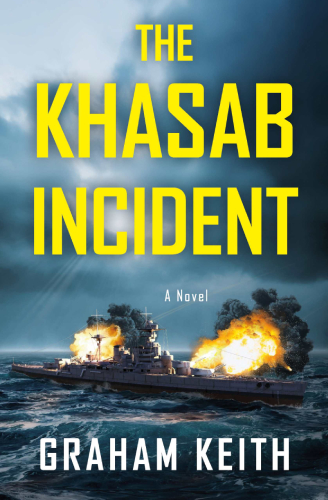
Graham Keith takes readers to that exact line in The Khasab Incident, where loyalty is put to the test and duty and empathy clash. Like many of the most profound novels about moral dilemmas, his work asks readers to look inward and confront uncomfortable questions: What would we do, if placed in the same situation? What compromises would we make? And could we live with them?
The Power of the Ethical Question
Because they address the core of human nature, novels about moral quandaries are timeless. They remove the distractions of everyday life and reveal our true motivations, the decisions that shape who we are.
From Dostoevsky to Ian McEwan, authors have examined this conflict by crafting stories in which every choice has moral and emotional significance. In these tales, morality is a dynamic spectrum influenced by situation, fear, and hope rather than being black or white.
The same tradition applies to Keith’s fiction. His characters are regular people put in extraordinary circumstances; they are neither villains nor saints. Their internal and external struggles stem from a conscience that won’t keep quiet.
The Grey Areas of Humanity
Perfect heroes have become boring to readers today. We seek truth, the untidy, flawed kind that is instantly recognizable. Every decision has a price, as the most compelling books about moral quandaries make clear. These conflicts, which can be loyalty versus honesty, love versus duty, or justice versus compassion, reflect the contradictions that exist inside each of us.
Keith does a beautiful job of capturing this in The Khasab Incident. The protagonist’s journey is one of reckoning rather than victory. Every choice turns into a self-negotiation, a balancing act between necessity and what feels right. The story is advanced by this subtly present moral tension, making for an exciting and thought-provoking read.
The Legacy of Moral Fiction
Moral fiction has always been about introspection, from Kazuo Ishiguro’s subdued narrators to Graham Greene’s conflicted priests. The best books about moral quandaries are meditative rather than moralizing. They compel us to think about our values practically rather than theoretically.
This tradition of self-reflection is evident in Keith’s writing. He writes in a measured, purposeful, and emotionally stable manner. Every silence is laden with implication, and every scene is layered with subtle meaning. He is aware that hesitation, the period of time between knowing what is right and deciding to do it, often causes more tension than actual action.
Because of this method, The Khasab Incident is not only a gripping story but also a mirror that represents the reader’s own moral environment.
Why Moral Complexity Matters
Novels about moral quandaries serve as a reminder that truth is rarely that straightforward in a society that frequently looks for easy solutions and moral absolutes. They teach empathy by empathizing with the weight of choice, not by being sentimental.
These kinds of stories are important because they improve our ability to think and, possibly, our humanity. They serve as a reminder that everyone fights invisible battles and that it is pointless to pass judgment without knowledge.
That philosophy is fully embraced in Keith’s fiction. His characters struggle with responsibility, guilt, and redemption, not as theoretical concepts, but as real-life situations. He encourages readers to examine not only their beliefs but also the reasons behind them.
The Quiet Aftermath of Choice
The most haunting part of a moral decision is not the act itself, but its aftermath, the reflection, the regret, the justification. Keith’s work captures this quiet emotional echo with remarkable restraint.
Unlike fast-paced thrillers that move from crisis to resolution, The Khasab Incident lingers in the space between. It shows how moral choices ripple through lives, altering relationships and reshaping identity. In doing so, it joins the company of the most thoughtful novels about moral dilemmas, where ethical struggle becomes the very heart of the narrative.
Final Thoughts
At its best, moral fiction does more than entertain, it illuminates. The finest novels about moral dilemmas challenge us to see ourselves in others, to recognise our capacity for both good and harm, and to find meaning in the choices we make.
Graham Keith’s The Khasab Incident exemplifies this rare blend of emotional depth and intellectual honesty. It is a novel for readers who appreciate complexity, who understand that morality is not a rulebook but a mirror.